
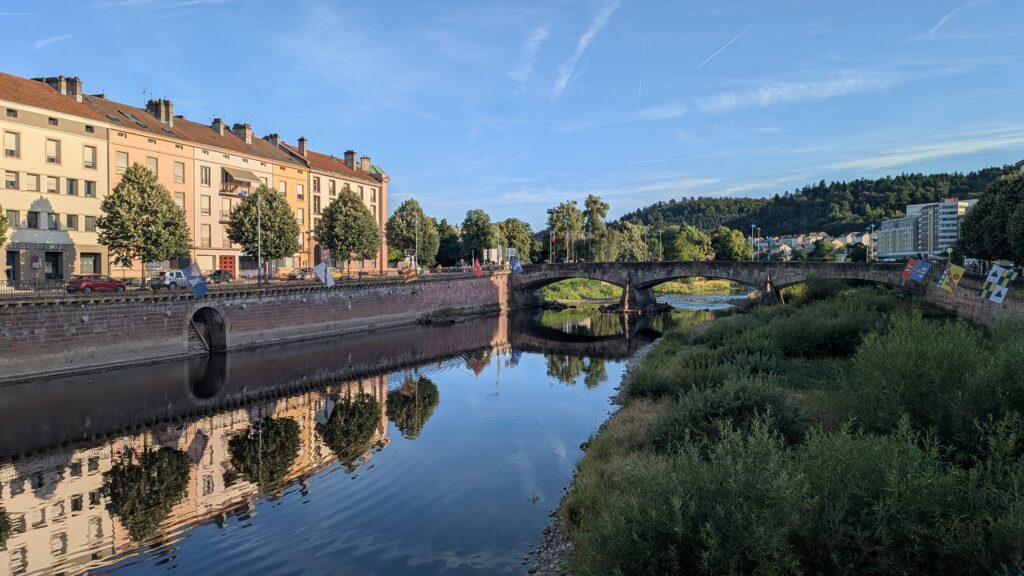
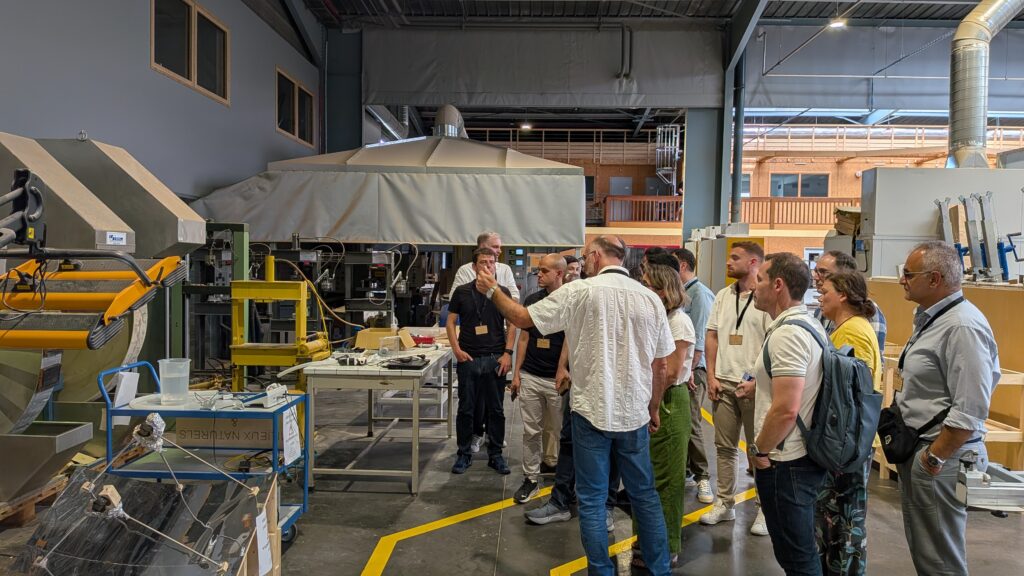
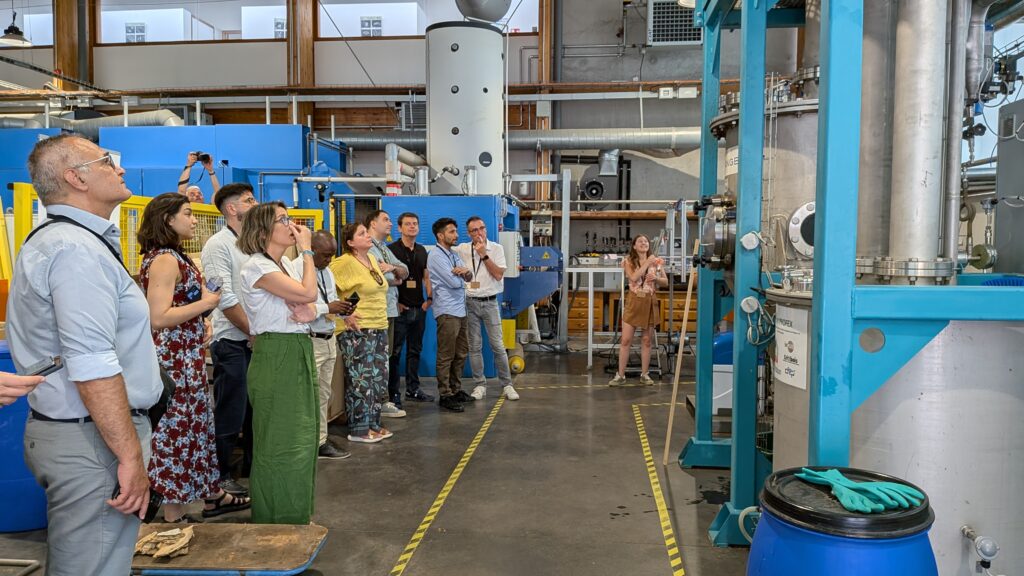
The Wood2Wood project held its fifth plenary meeting in Epinal, France on July 7 hosted by consortium partner University of Lorraine (LERMAB) and ENSTIB to discuss progress and next steps towards wood waste valorisation.
For the Wood2Wood project, Epinal holds special significance. Historically, the town was renowned for its wood-based craft, known as Imagerie d’Épinal, an art form in which images are created from engraved wood. It all started around the late 1700s, when prints were engraved onto wooden boards, then hand pressed and colours applied to it using a stencil and round brushes. Eventually, this unique technique of wood cut painting became well known across Europe.
But this has largely been possible because of the dense forest cover in the Vosges region that supplied wood resources to the town making it possible for the paper and timber industries to thrive. During the 18th century, Epinal’s economy and, perhaps even, identity was built on the idea of working with wood as a craft. Today, it’s known more for research and innovation in wood science.
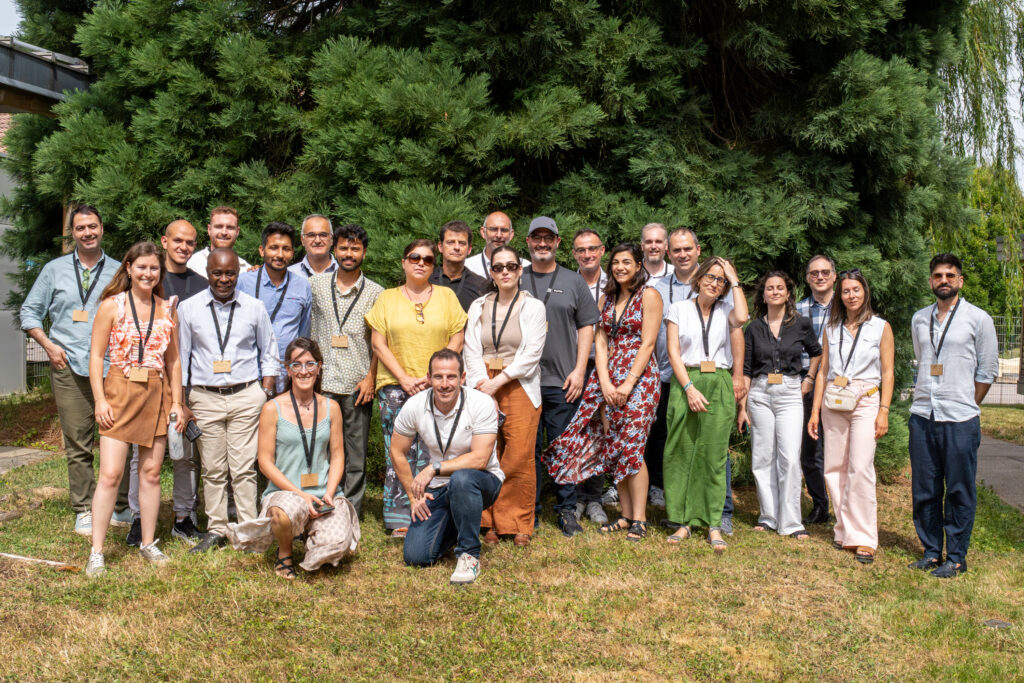
Naturally, in this context, LERMAB and ENSTIB play a central role in spotlighting the region’s wood science prowess, especially in research and innovation. Thus, Epinal formed the perfect background for the Wood2Wood plenary meeting.
Among the various developments discussed was LERMAB’s steam explosion process for post-consumer wood. In this process, old furniture and demolition waste (usually rejected by recyclers because of glue, coatings and paint) are blasted with high-pressure steam and rapidly depressurised, physically stripping away most of that contamination. In LERMAB’s trials, this removes over 90% of the glue, and the resulting fibre has already been pressed into particleboard meeting industry’s quality standards.
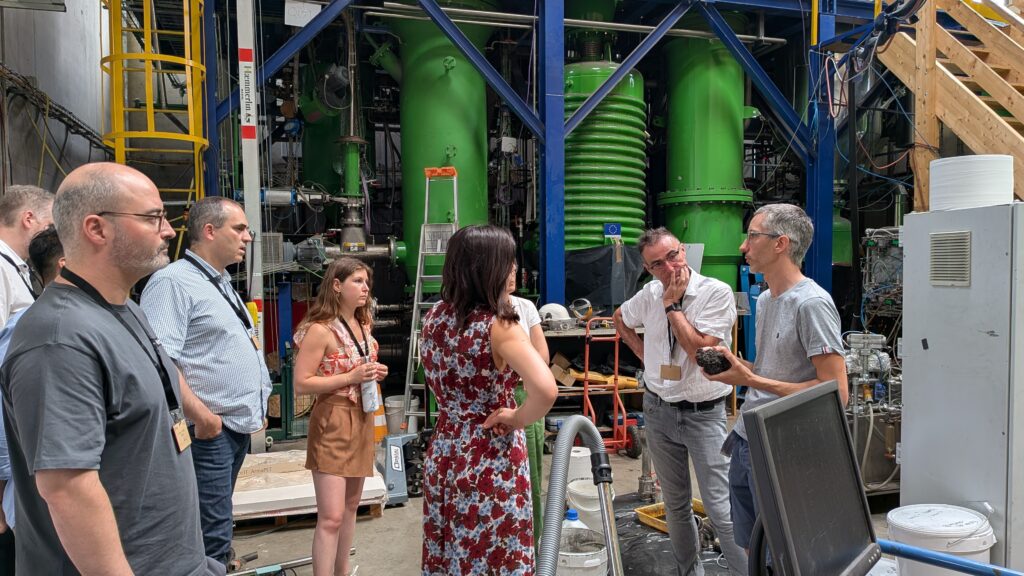
That still leaves the wastewater from the process that carries formaldehyde released from the old glue. LERMAB has identified a fungal strain able to biologically treat that effluent, dramatically cutting its formaldehyde content.
Now, let us explore in general the other developments in the project and what it means for the wood waste sector.
AI and digital tools
The project is developing a digital planning tool that models how construction and demolition waste (C&DW) wood flows through a region, from collection points to sorting facilities to end users. Its most useful feature is a built-in AI assistant: a waste planner or municipal official can describe their local situation in plain language, and the tool builds the flow model for them, without requiring specialist modelling skills. It can compare three ways of organising a regional sorting network: one large central facility, several smaller local facilities, or a mix of both. It can then estimate which is more efficient and profitable. This is still a design-stage tool; it hasn’t yet been tested against real operating data.
On the sorting line itself, the project combines several scanning technologies (using light, X-rays and infrared) to automatically identify clean wood from contaminated or coated wood, and to separate glass, aiming for 95% sorting accuracy. This is paired with robots that physically pick and sort items, working alongside human sorters, with augmented-reality headsets being tested to help workers or supervisors flag items that were sorted incorrectly.
An integrated digital platform to improve secondary material flows is being built to track materials through their whole life, including a “digital product passport” or DPP that records what a piece of recovered wood or a new product made from it actually contains, alongside tools that estimate available material volumes, optimise transport and logistics between suppliers and processors, and assess the environmental, cost and social impact of different recycling routes.
Watch our DPP walkthrough video
What this could mean for the sector: Manual sorting and simple visual inspection currently miss a lot of contamination, which is one reason usable wood ends up landfilled, burned, or downgraded to low-value applications rather than recycled into new products. More accurate, automated sorting could measurably increase how much wood is recovered at high quality. The planning tool could also lower the barrier for smaller municipalities to make informed, data-backed decisions about investing in sorting infrastructure, rather than relying on external consultants. And the digital product passport approach lines up with a broader EU regulatory push (the Ecodesign for Sustainable Products Regulation) toward requiring this kind of traceability. Organisations that get ahead of this now may be better placed when it becomes a compliance requirement.
New ways to recover value from waste wood
Cleaning up contaminated wood. A lot of post-consumer wood such as old furniture, demolition offcuts, etc., is coated in glue, paint or laminate, which normally makes it unsuitable for recycling into new wood panels. The project uses a process similar to a pressure cooker: wood chips are blasted with high-pressure steam and then the pressure is suddenly released, which physically breaks apart the wood fibres and strips away most of the glue and coating (over 90% removed in testing). The wastewater from this process still contains some formaldehyde (a chemical of concern for health and air quality), so the team is using a naturally occurring fungus to break that formaldehyde down before the water is discharged, cutting the formaldehyde load roughly six-fold. The cleaned fibre has already been pressed into particleboard that meets the quality standards of the furniture industry.
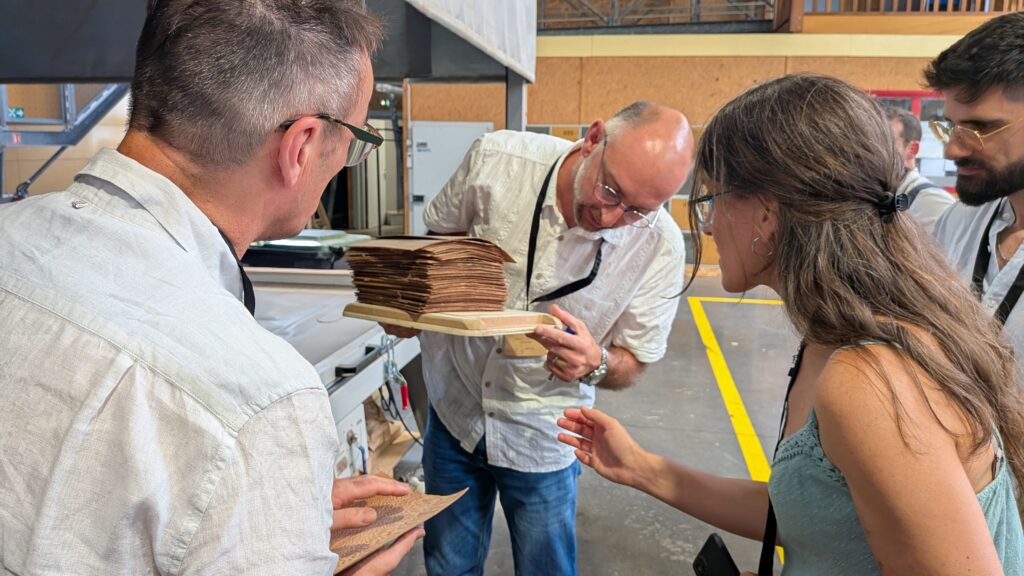
A cleaner glue, made from the same waste. Conventional wood panels are usually bound with formaldehyde-based glues, which is one reason recycled or reused wood panels can raise indoor air quality concerns. The project has developed a new type of glue made directly from liquefied wood waste, avoiding the use of formaldehyde in the recipe.
This video takes you through three of our Use Cases, including Chemical and Bioremediation tech that we are speaking of:
Growing insulation from fungus. Rather than using any synthetic glue at all, one line of work grows fungus through wood waste particles; the fungal threads (mycelium) bind the particles together into a lightweight panel, similar in concept to the “mushroom packaging” now used in some consumer products. The result is a low-carbon, chemical-free insulation material made from waste that would otherwise be discarded.
Turning sawdust and wood residues into high-performance composites. Very fine wood byproducts such as lignin and wood nanofibres, which are normally underused leftovers of wood processing are being blended into a bioplastic and used in 3D printing to make honeycomb-structured acoustic panels, with encouraging durability results so far.
Making use of the fractions too damaged to recycle. Not all wood waste can be cleaned up for reuse. For material too degraded, contaminated, or mixed with other waste (like sewage or paper-mill sludge) to be recycled, the project is testing two energy-recovery routes: heating the material under pressure in water (hydrothermal carbonisation) to turn it into a solid, coal-like fuel; and heating wood waste and MDF (a dense composite board) with limited oxygen to convert it into a combustible gas mixture, which is then chemically upgraded to increase its hydrogen content.
Getting more value out of ash. Burning wood waste for energy leaves behind ash, which is often a disposal headache because it can leach heavy metals into soil and water. The project treats this ash with water and a mild alkaline chemical under heat, which reorganises its minerals into a stable, rock-like structure that locks the metals in rather than letting them escape — turning a disposal liability into a potentially usable material, such as an input for construction products.
Turning waste gas into specialty chemicals. In the most exploratory line of work (currently paused pending a funding approval), the hydrogen and CO2 captured from the gasification step would be fed to specially selected bacteria that convert them into a fatty alcohol, a chemical building block already used to manufacture detergents and personal-care products.
What this could mean for the sector: Together, these routes create a genuine hierarchy of options for wood waste, rather than the current default of “recycle if clean, otherwise landfill or incinerate.” Even heavily contaminated or degraded wood gets at least one, and often several, higher-value alternatives to disposal: first as a recycled material, then as a chemical or energy feedstock, with even the leftover ash given a second life. This kind of cascading use is central to circular-economy thinking, but it’s rarely demonstrated end-to-end with real contamination and real yield data, which is what makes this set of results useful as reporting material. It’s also directly relevant to landfill diversion targets and to reducing reliance on virgin timber and virgin petrochemical inputs.
Business, skills, standards and policy
Good technology alone doesn’t get adopted. So, a part of the project is testing whether these processes actually make commercial sense and can operate within existing rules within the EU. The team has interviewed industry stakeholders and is running a wider survey to validate business models for its three main recovery routes (new building materials, chemical/biological recovery, and energy/gas recovery), looking at the economic case, the environmental benefit, and the social acceptance of each. Separately, the consortium has catalogued 25 distinct results from the project and grouped them into five bundled “packages” that are easier for outside companies or investors to evaluate and adopt than 25 separate pieces of technology.
On the workforce side, the project surveyed 380 experts to understand how jobs in circular wood processing will change by 2035, and has proposed entirely new job categories, for example, a role focused on coordinating all the different actors (municipalities, demolition firms, recyclers, communities) involved in a circular wood system, and a role focused on physically tracking, assessing and redistributing recovered wood materials.
On standards, the team is mapping which existing technical standards and certification schemes apply to recycled wood products, and where gaps exist that prevent secondary (recycled) wood materials from being confidently specified by architects or manufacturers. A companion piece of work is drafting policy recommendations on the regulatory barriers that currently make it harder to use construction, demolition and furniture waste wood in new products.
What this could mean for the sector: This is arguably where the real long-term bottleneck is. A recycled material with no accepted standard or certification is hard for a manufacturer or architect to specify with confidence, no matter how good the underlying technology is – so the standards and certification work may end up mattering as much as the technical innovations themselves for actual market uptake. Similarly, workforce planning matters because sorting facilities are becoming more automated and data-driven; without workforce transition support, the skills gap could become the limiting factor on how fast these technologies can scale, even where the technology and the business case are both sound.
How it all blends together: from linear flow to circular system
Right now, most construction, demolition and furniture wood waste follows a largely linear, one-way path: material is generated, sorted (often manually and imperfectly), and the portion that’s too contaminated, mixed, or low-value to recycle is landfilled or incinerated, with little chance of recovering that value again.
Taken together, what this set of developments does is insert multiple recovery loops into that flow instead of one dead end. Digital planning tools help a region decide, at the design stage, how to lay out a sorting network so more material gets captured in the first place. Better sensor-based sorting and robotics then increase how precisely that material gets separated by quality and contamination level, rather than being scrapped as one mixed, low-value stream. Material that used to be rejected as “too dirty to recycle” – because it was glued, coated or laminated – can now be cleaned through the steam and fungal treatment process and fed back into new wood panels, using a glue that itself comes from the same waste stream, rather than from new petrochemical inputs. Material that still can’t be recycled into a wood product isn’t sent straight to landfill either: it can be grown into insulation via fungus, blended into high-performance composites, or, as a last resort before disposal, converted into fuel, gas or specialty chemicals – and even the ash left over from that last step can be stabilised and reused rather than landfilled.
Digital product passports (DPPs) and life-cycle assessment tools run alongside all of this, creating a data trail that lets buyers, certifiers and regulators trust that a “recycled” material really is what it claims to be – which matters because that trust is often what’s missing when recycled materials struggle to compete with virgin materials in the market. Supply chain optimisation tools then help coordinate the physical logistics of moving material between the many different organisations involved (waste collectors, sorters, processors, product manufacturers) so the material actually reaches the right next step instead of stalling.
None of this holds together, though, without the less technical pieces: business models that make each recovery route commercially viable, standards and certifications that let recycled materials be specified with confidence, and a skilled workforce able to operate increasingly automated and data-driven facilities. Those three elements are effectively the connective tissue that turns a set of individually promising technologies into an actual functioning system; one where wood waste circulates through several tiers of reuse, repair and recovery instead of exiting the economy at the first point it becomes “too difficult” to handle.